
This is the part I find surprising.
A customer comes to a distributor's website looking for the price of Product A. That sounds like a simple transaction, but it is actually a valuable moment.
Product B may be the accessory they need to complete the installation. Product C may be a compatible upgrade. Product D may be a lower-cost alternative. Another manufacturer may offer a related product that solves the next problem the customer is likely to have.
All of that can be presented in plain language, based on the customer's needs, without turning the experience into an aggressive sales pitch.
The customer remains in control. They asked the question. The system simply gives them useful information at the right time and makes the next step obvious.
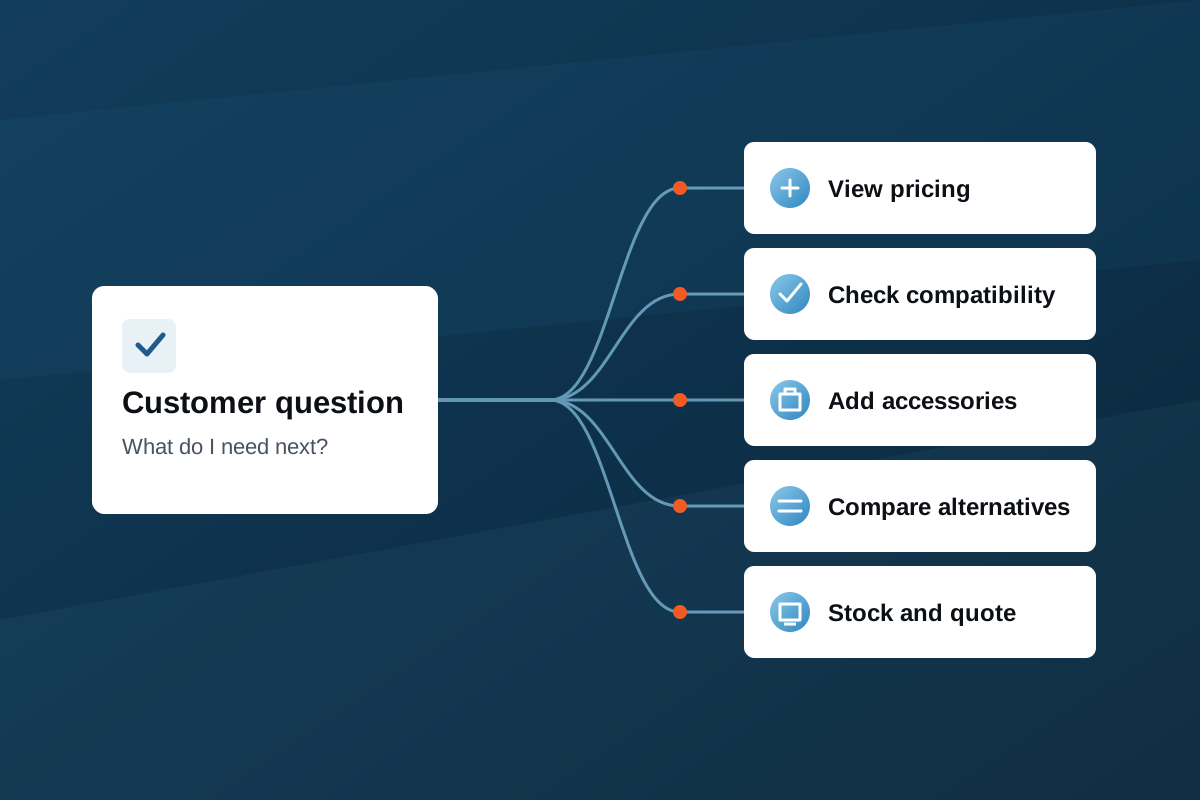
View pricing. Check compatibility. Add the required accessory. Compare alternatives. See what's in stock. Request a quote. Talk to someone if you need help.
Each interaction is another opportunity to help the customer move forward.
The buying journey is full of these moments.
For manufacturers and distributors, these moments exist throughout the buying journey. Product searches, pricing requests, specification lookups, replacement products, accessories, availability checks and technical questions all create opportunities to introduce customers to more of the product offering while making the buying process as frictionless as possible.
What surprises me is how many of these opportunities are still treated as isolated website functions.
A price lookup is a price lookup.
A product search is a product search.
A technical question is sent to customer service.
A cross-sell depends on someone remembering to mention it.
These interactions can be connected.
The challenge is rarely just finding a piece of technology. The harder part is recognizing the business opportunity first, understanding where technology can improve the process, deciding what should and should not be automated, and then building the experience so it feels useful rather than forced.
Sometimes the answer might be a recommendation engine. Sometimes it could be a better product database, a customer portal, a rules-based application, an AI-assisted search tool, or something much simpler.
The technology will keep changing and will become easier to implement.
The more important capability is being able to look at an existing or new customer journey and recognize where a better digital interaction could make buying easier, help customers understand more of the product offering, and create a natural path toward conversion.
Those opportunities are everywhere. Once you start looking for them, it is difficult not to see them.