AI that answers from your information, not the internet

Useful AI answers from your approved information, handles a defined task and says when it does not know.

The ProductChat IQ website showing its product-support assistant and document-based answer workflow.

Where AI earns its keep

Useful jobs, with the limit beside each one.

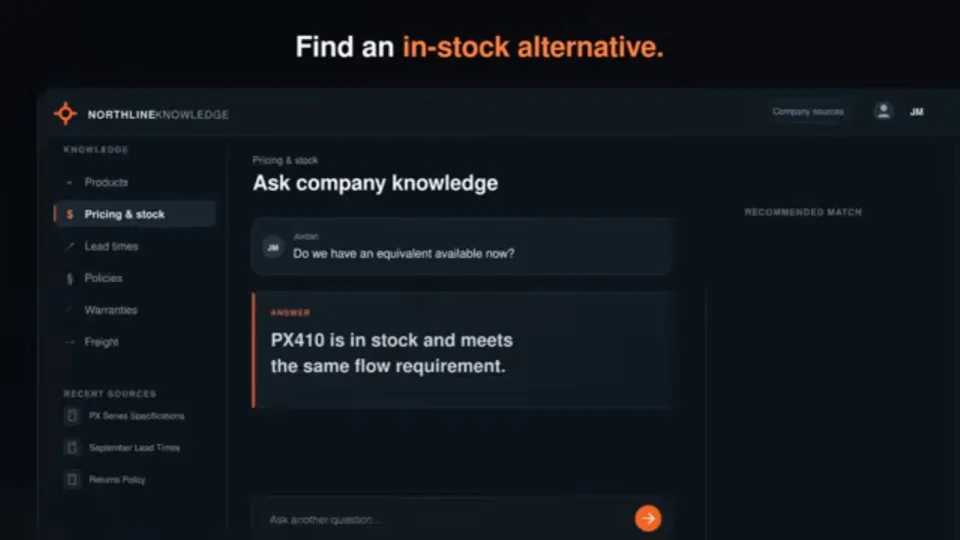
  1. Answer buyers instantly, day or night

    Customer service and product assistants that answer from your own approved documents.

    The limit: Says it does not know, and hands to a person.

  2. Qualify and route every enquiry

    Lead qualification agents that sort what arrives and route it with context attached.

    The limit: It ranks and routes. A person still sees everything.

  3. Recommend the next product

    Recommendation built from how your products relate, not from what others bought.

    The limit: It suggests. Where a wrong call is costly, it points to a person.

  4. Arm the sales team

    Sales support agents holding your pricing rules, lead times and product history.

    The limit: Internal only, behind a login.

  5. Find anything in your documents

    Search and document intelligence that returns the clause, table or drawing.

    The limit: Only as good as the documents you give it.

  6. Take work off your team

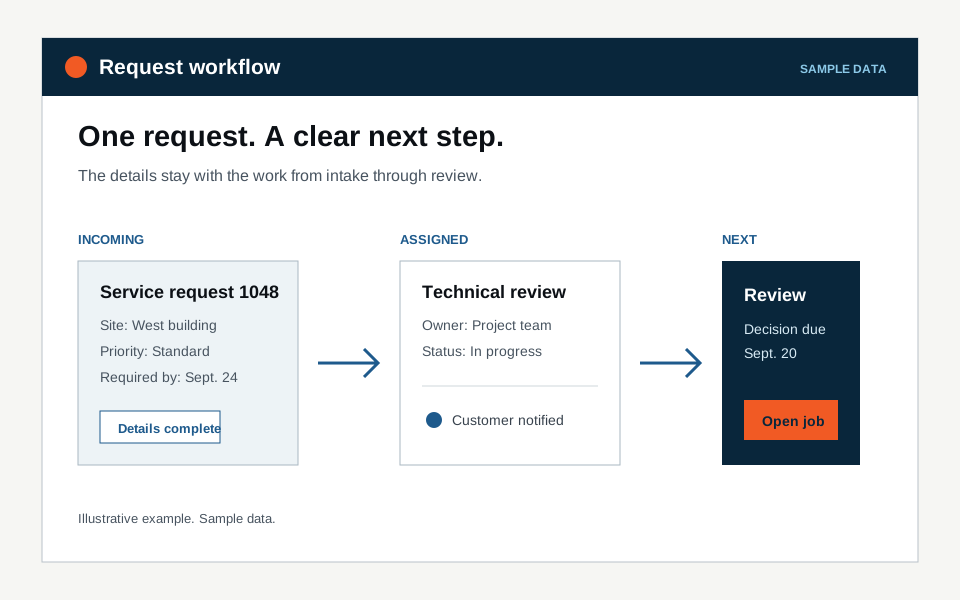
    Workflow agents and automation, integrated with the systems you already run.

    The limit: Automating a broken process produces the wrong answer faster.

Where your information goes

Know what the system can read, store and share.

  1. You decide what it reads

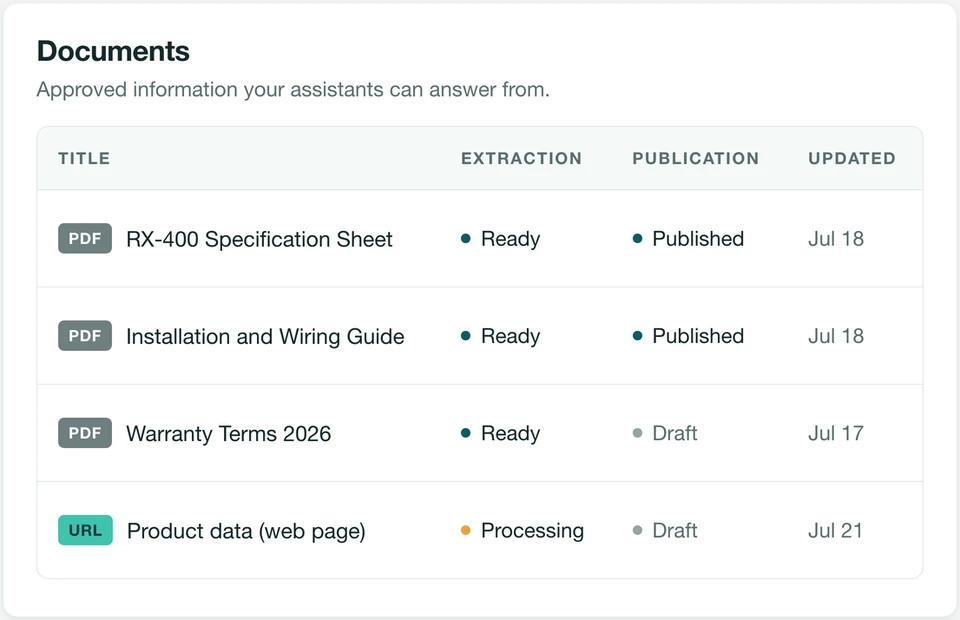
    Built on material you approved. Adding a document is a decision, not a side effect.

  2. Public and private are separated deliberately

    Pricing, margins and customer records stay behind a login, by design.

  3. The answers can be checked

    Every conversation is logged, so you catch a wrong answer before a customer does.

  4. A person stays accountable

    It answers, drafts, sorts and suggests. Where the stakes are real, it hands over.

We do not automate high-consequence decisions about people or build clinical systems.

How an AI project actually runs

  1. Name the task

    Choose one repeatable job. If it cannot be described clearly, it is not ready to automate.

  2. Get the material in order

    Choose the approved sources and remove conflicting or outdated material.

  3. Build it narrow, then test it hard

    Test correct answers, refusals, handoffs and the cases most likely to fail.

  4. Watch it in the open

    Review real questions, improve weak sources and adjust the boundaries.

What question is your team tired of answering?

Talk about an AI project