Marketing
Turn supplier information into campaigns, catalogue content and sales material that help customers and branches act.
- Campaigns and supplier content
- Catalogue and product messaging
- Sales and branch materials

Your customers usually know what they want. What they do not know is whether you have it, what it costs them, and when it lands.
A customer may arrive with a part number, an urgent need or a broad requirement. Useful content helps them understand the range. Clear quote, availability and account workflows can then move the request to the right team.
Connect campaigns and catalogue content with quote, account and self-service tools.
Turn supplier information into campaigns, catalogue content and sales material that help customers and branches act.
Give customers their price, documents, history and a faster path from part number to quote.
Supplier content needs enough detail to identify the product and its alternatives. A quote request can then collect quantity, delivery location and account details before inside sales picks it up. Live stock and pricing need a connection to the system that owns them.
Start with the questions inside sales answers most often. Put the answers where customers already look.
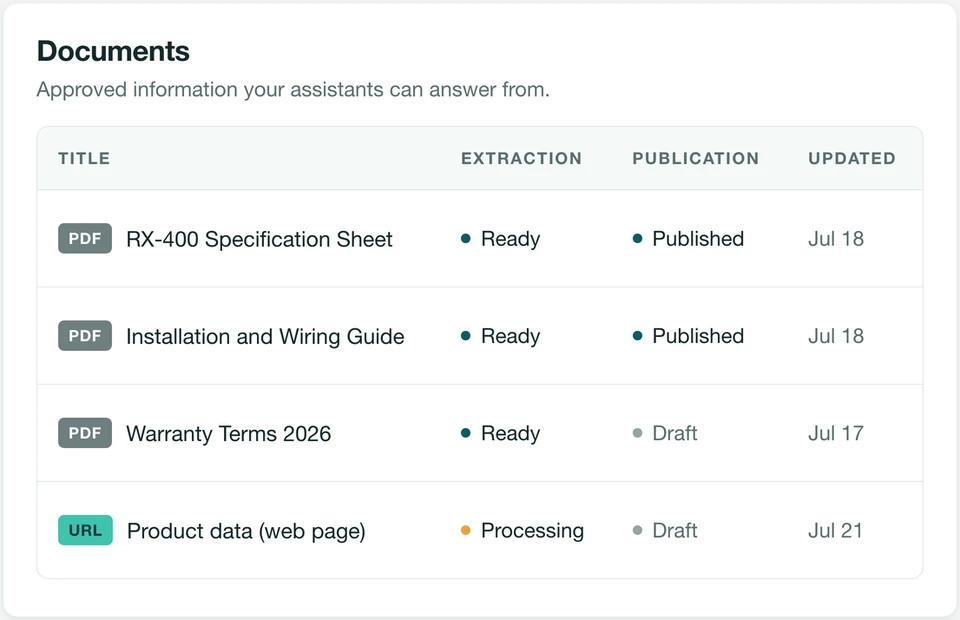
ProductChat IQ, an OrangeFin product, shows how a published document library can support sourced answers. Its knowledge answers do not stand in for live stock or account pricing.
See the projectA defined campaign, website, application or connected scope planned and delivered by OrangeFin.
Explore AgencySenior marketing direction and hands-on execution working alongside your team.
Explore Fractional